Kathmandu Guide
Your guide to Kathmandu
Gayatri grew up here, so this is our insider’s guide: where to go, what to eat, and how to get around. Most of these places are easy to see in a day or two, so if you can, stay a little longer and explore!
-
The local currency is the Nepali rupee (NPR). As a rough guide, NPR 1,000 is about A$11. Nepal is still very much a cash country, especially at smaller shops, taxis and markets. ATMs are easy to find in Kathmandu, but withdrawal limits can be low, so a few withdrawals may be needed. Let your bank know you’re travelling. Bigger hotels and restaurants usually take cards. Tipping isn’t compulsory, but around 10% is appreciated in restaurants if a service charge hasn’t already been added.
-
Grab a local SIM at the airport (Ncell or Nepal Telecom). You’ll need your passport, and it’s cheap. Alternatively, check if your phone supports an eSIM, or organise international roaming before you leave. Most hotels and cafés have Wi-Fi. WhatsApp is the main way people keep in touch in Nepal.
-
Nepal uses different plugs to Australia (mostly the round-pin types C, D and M), so bring a universal travel adaptor.
-
Clear, sunny days around 18–20°C, and cold nights that can get down to around 2°C. Pack layers.
-
Taxis are everywhere. Agree on the fare before you get in, or use the Pathao or inDrive apps. Traffic can be slow, so leave extra time for everything.
A few culture tips
Walk clockwise around stupas and temples.
Take your shoes off before entering temples and people’s homes.
Always ask before photographing people, especially at religious sites. No photos are allowed inside the Kumari Ghar (House of the Living Goddess).
Some Hindu temples, including the main temple at Pashupatinath and the temples around Indra Chowk, don’t allow non-Hindus inside. Respect the signs. The surrounding areas are still well worth a visit.
Watch out for monkeys at Swayambhunath and Pashupatinath. Keep food and sunglasses out of reach!
Keep an eye on your belongings in busy markets like Asan, where pickpocketing happens.
A friendly “Namaste” with palms together goes a long way!
Things to do
We’ve grouped these into day trips: places that are close together and easy to see in the same day.
Good to know: distances are from Thamel, the main tourist area. Entry fees are what foreign visitors pay and are approximate, so bring cash. Travel times depend a lot on traffic.
Thamel and around
These three are all within a short walk of each other, so they’re easy to combine in a day.
-
In Thamel · Free to wander
Kathmandu’s main tourist area, with its own vibe and character. Wander the shops, cafés and bakeries, then stay for the bars, live music and nightlife. It’s great in the evening, and a good base for exploring the city. -
About 0.5 km · 5–10 min · Entry NPR 400
Escape the chaos in this peaceful courtyard garden, like a mini botanical garden right next to Thamel. -
About 2 km · 10–20 min · Entry NPR 500
The former royal palace, now a museum covering the recent history of Nepal’s royal family. Afterwards, walk to Durbar Marg (Kingsway) for a more modern side of the city: shopping, fancy cafés and restaurants.
Swayambhu to Durbar Square
Start at Swayambhunath in the morning (or finish there for sunset), then explore old Kathmandu
-
About 3 km · 15–25 min · Small entry fee may apply
A Buddhist temple with great views over Kathmandu from the top, famous for the monkeys that roam freely around it. Spin the prayer wheels, feed the pigeons (usually mornings and evenings), and browse the art and craft shops.There are two ways up: climb the 365 steps from the front gate, or drive to the back entrance, which has easier stairs. If you climb the front steps, look out for the little park on the way back down. It has a wishing well, a wall fountain and a monkey swimming pool!
-
About 2.5 km · 15–25 min · Entry NPR 1,000
Nepal’s tallest structure, rebuilt after the 2015 earthquake. Go up for views across the Kathmandu valley. The remains of the old tower are preserved beside the new one. -
About 2 km · 10–20 min · Entry NPR 1,000
The old royal palace of the Kathmandu kings and now a UNESCO World Heritage Site, surrounded by traditional architecture, wood carvings and temples. Visit the old palace museum, Hanuman Dhoka and the Kumari Ghar.The Kumari (Living Goddess) is a young girl believed to be the living embodiment of the goddess Taleju. If you’re lucky, you might see her briefly at one of the windows. No photos are allowed inside the Kumari Ghar.
-
About 1.5 km · Free to wander
Busy local shopping streets, popular for street food. Grab a lassi, and try TipTop for street food and Indian sweets. Foreigners can’t enter the temples here, but the architecture and atmosphere are worth the visit. -
About 1 km · 10–15 min · Free
A bustling wholesale market where you can buy anything and everything. It gets very crowded, so keep an eye on your belongings.
Pashupatinath and Boudhanath
Two of Nepal’s most sacred sites, close to each other and just down the road from the wedding venue. Visit Boudhanath at dawn or dusk if you can.
-
About 5 km · 20–35 min · Entry NPR 1,000
Nepal’s most sacred Hindu temple, on the banks of the Bagmati River. Non-Hindus can’t go inside the main temple, but you can explore the surrounding temples and riverside. Watch out for monkeys! -
About 6 km · 25–40 min · Entry NPR 400
One of the largest stupas in the world. Walk around it clockwise (the kora), spin the prayer wheels, visit the monasteries, feed the pigeons and grab a drink at a rooftop café. The atmosphere is magical at dawn or dusk.Please don’t climb onto the stupa itself. Walking on it is no longer allowed, even if the door is open.
Patan
Patan (in Lalitpur, across the river from Kathmandu) is the heart of Newari culture. The Newari are an ethnic group with their own language and food.
-
About 7 km · 30–45 min · Entry NPR 1,000
Wander among beautiful old buildings, visit the Golden Temple and the Patan Museum, browse the art and craft shops, and try some Newari street food.
Bhaktapur and the Shiva statue
Allow half a day to a full day for these two. They’re further out, so take a taxi.
-
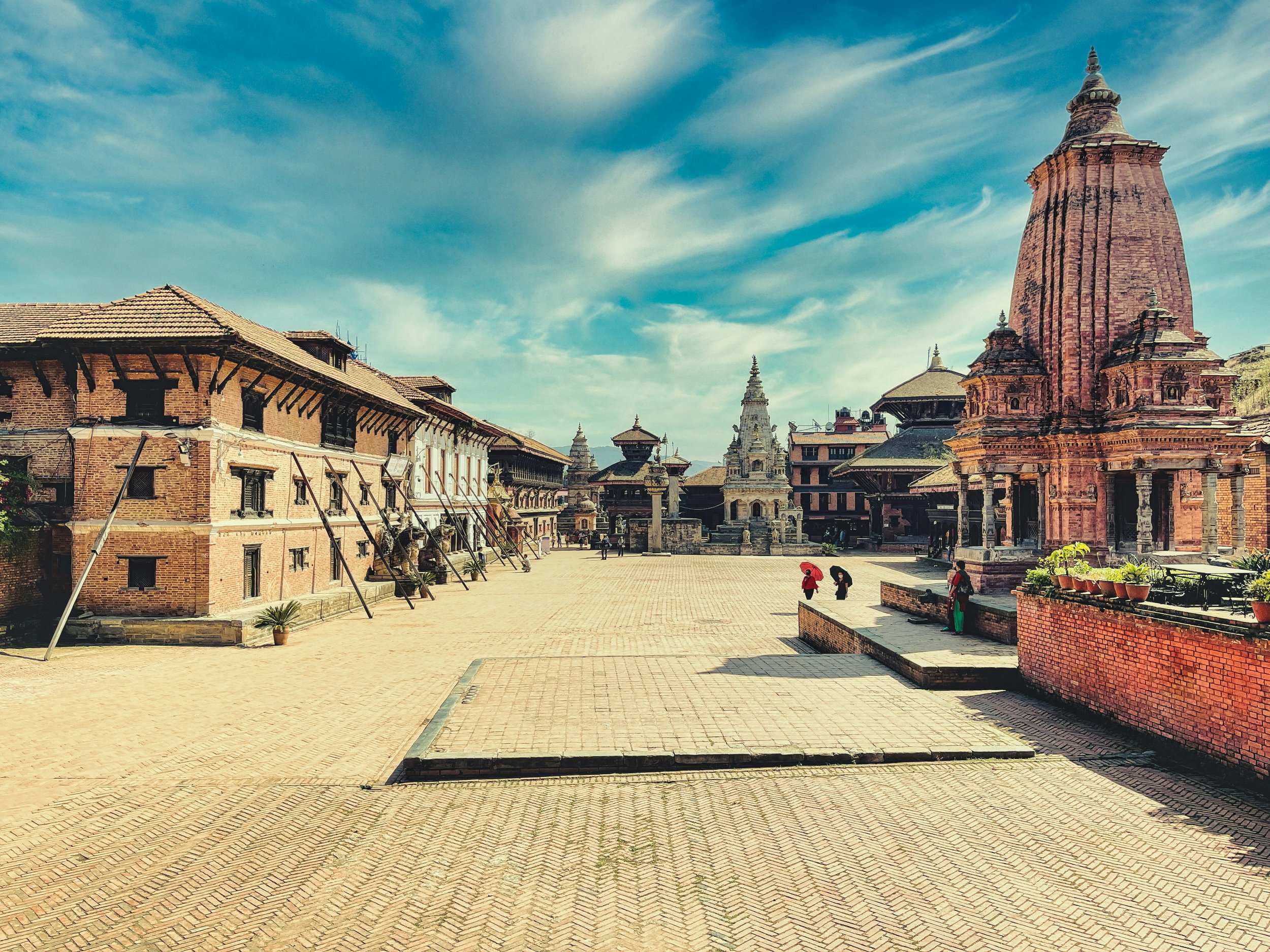
About 13 km · 40–60 min · Entry NPR 1,800
A beautifully preserved Newari city, full of historic buildings and intricate woodwork. See the five-storey Nyatapola temple (nyatapola means “five storeys”) and Pottery Square.Must try: juju dhau (“king curd”), a rich, creamy homemade yoghurt sold in local shops all over Bhaktapur.
Make your own souvenir: ask one of the pottery shops for a quick hands-on lesson. Make your piece, explore Bhaktapur while it dries, then come back and collect it.
-
About 25 km · 1–1.5 hrs · Entry fee may apply
A 143-foot-tall statue of the Hindu god Shiva, one of the tallest in the world.
Chandragiri Hills
Allow a full day, and go on a clear day for the best mountain views.
-
About 15 km · 1–1.5 hrs · Cable car NPR 1,000–1,500
Take the cable car up to a Hindu temple with big Himalayan views. At the top there’s a zipline, sky bike ride and shops.
Nagarkot
Allow a full day. Go early for sunrise if you’re keen!
-
About 28 km · 1.5–2.5 hrs · Free
Famous for sunrise and sunset over the Himalayas, with plenty of hiking trails.
Pokhara
A relaxed lakeside town with mountain views, about a 25-minute flight or a long bus ride from Kathmandu. Distances are from Lakeside, the main tourist area.
-
At Lakeside · Free (boat hire extra)
Hire a boat, watch the sunset and relax by the lake. -
About 1 km · 5–10 min by boat · Boat hire fee
A temple on a small island in the middle of Phewa Lake, reached by boat. -
About 7 km · 30–45 min · Taxi fare
A hilltop stupa with Himalayan views. Hike up or take a taxi. -
About 12 km · 30–45 min · Taxi fare
The best spot for sunrise over the Himalayas, and the place to go paragliding.
Food to try
Momo: Nepali dumplings. You’ll be hooked.
Dal bhat: lentils, rice and curry, Nepal’s national dish (and refills are usually free!).
Newari food: try a Newari set meal or street food in Patan or Bhaktapur.
Juju dhau: Bhaktapur’s famous “king curd” yoghurt.
Lassi and Indian sweets: grab some around Indra Chowk and New Road. TipTop is a local favourite.
Masala tea (chiya): you’ll be offered it everywhere, so say yes.