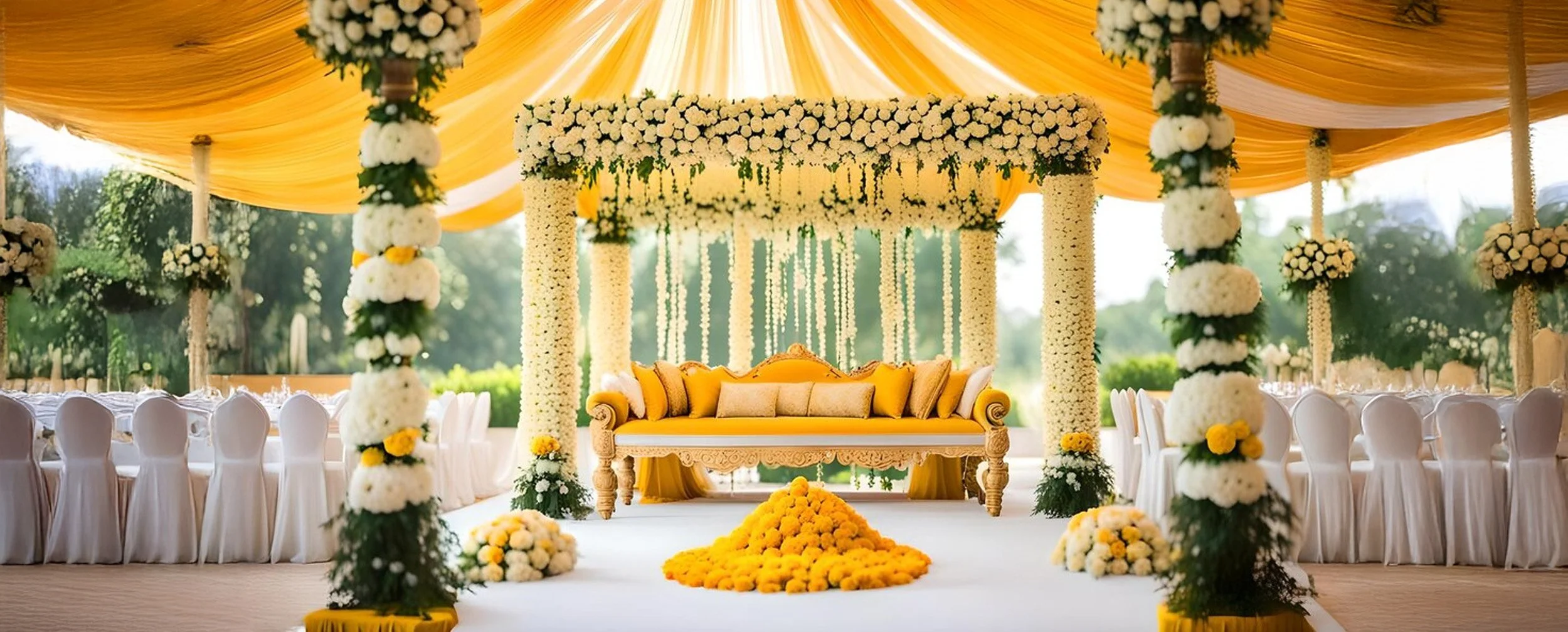
The Wedding Day
Wednesday 2 December 2026
Grand Norling Hotel’s Resort, Gokarna, Kathmandu
We’re having a traditional Nepali Hindu wedding, with the whole celebration packed into one big day. It runs for most of the day, so settle in, eat lots, and enjoy it. Don’t worry if you don’t know what’s going on. Most of the guests won’t either, and that’s half the fun! Here’s a rough guide.
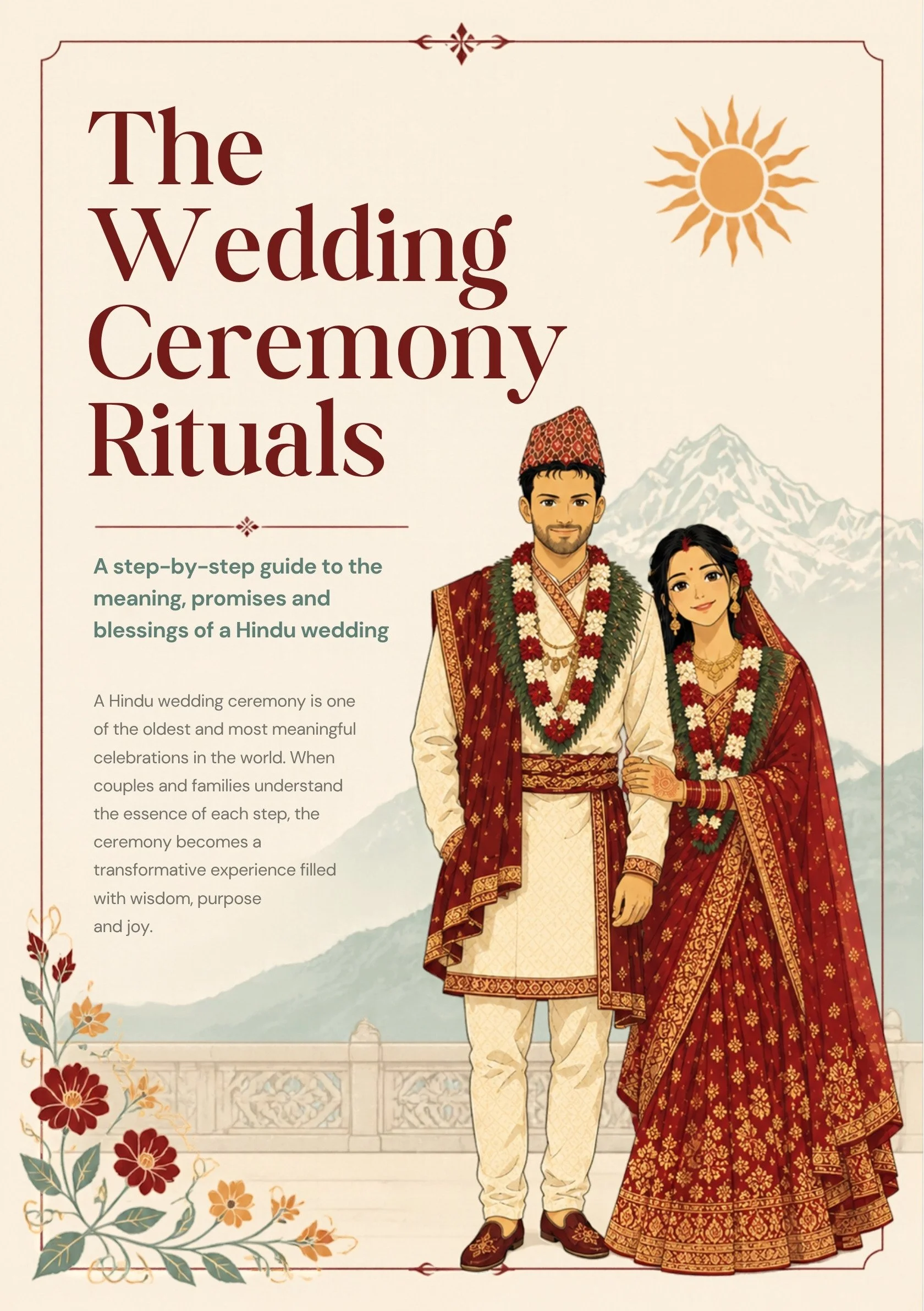
The Wedding Ceremony Rituals
A step-by-step guide to the meaning, promises and blessings of a Hindu wedding.
A Hindu wedding ceremony is one of the oldest and most meaningful celebrations in the world. When couples and families understand the essence of each step, the ceremony becomes a transformative experience filled with wisdom, purpose and joy.
-
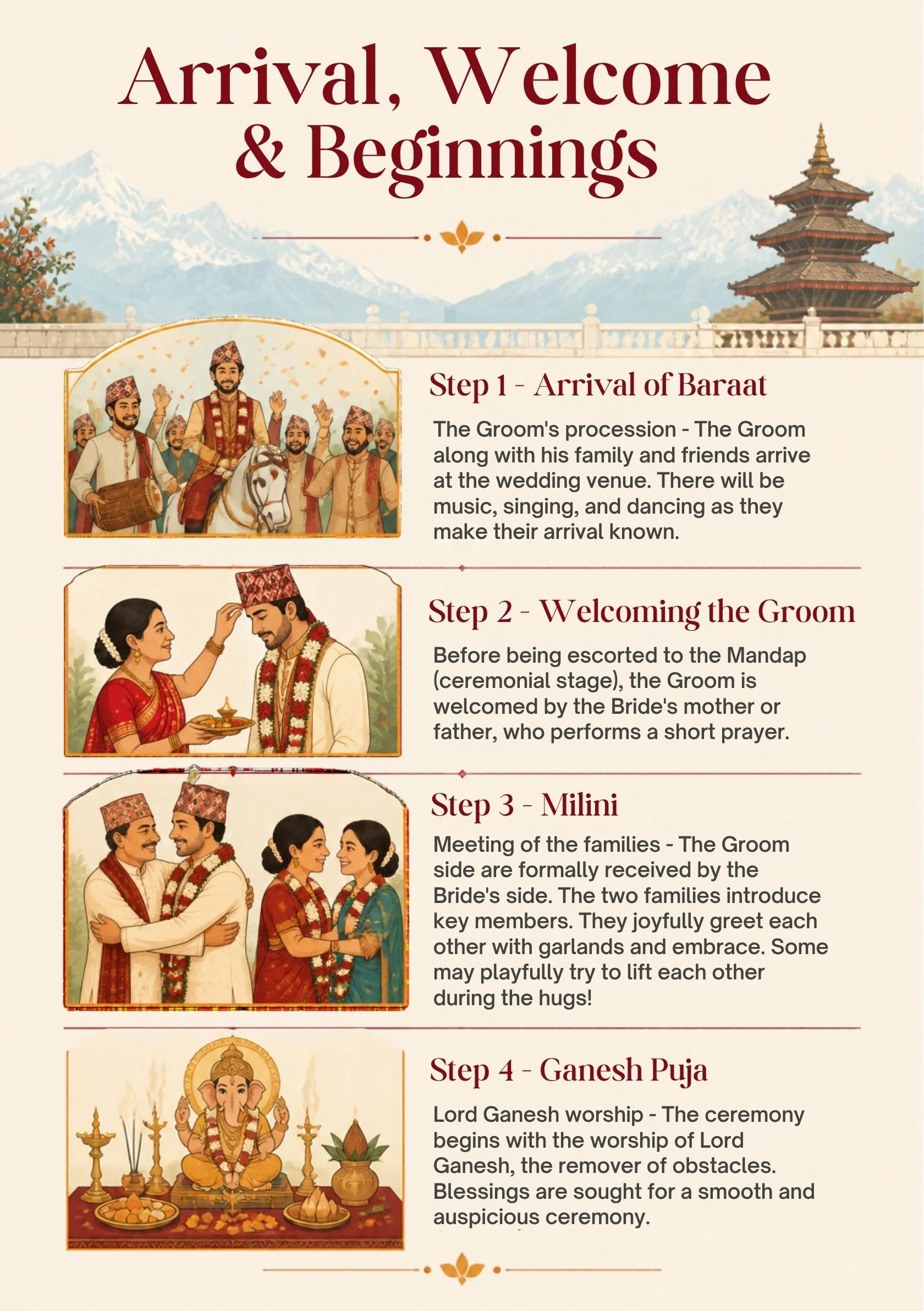
The Groom’s procession – The Groom along with his family and friends arrive at the wedding venue. There will be music, singing, and dancing as they make their arrival known.
-
Before being escorted to the Mandap (ceremonial stage), the Groom is welcomed by the Bride’s mother or father, who performs a short prayer.
-
Meeting of the families – The Groom side are formally received by the Bride’s side. The two families introduce key members. They joyfully greet each other with garlands and embrace. Some may playfully try to lift each other during the hugs!
-
Lord Ganesh worship – The ceremony begins with the worship of Lord Ganesh, the remover of obstacles. Blessings are sought for a smooth and auspicious ceremony.
-
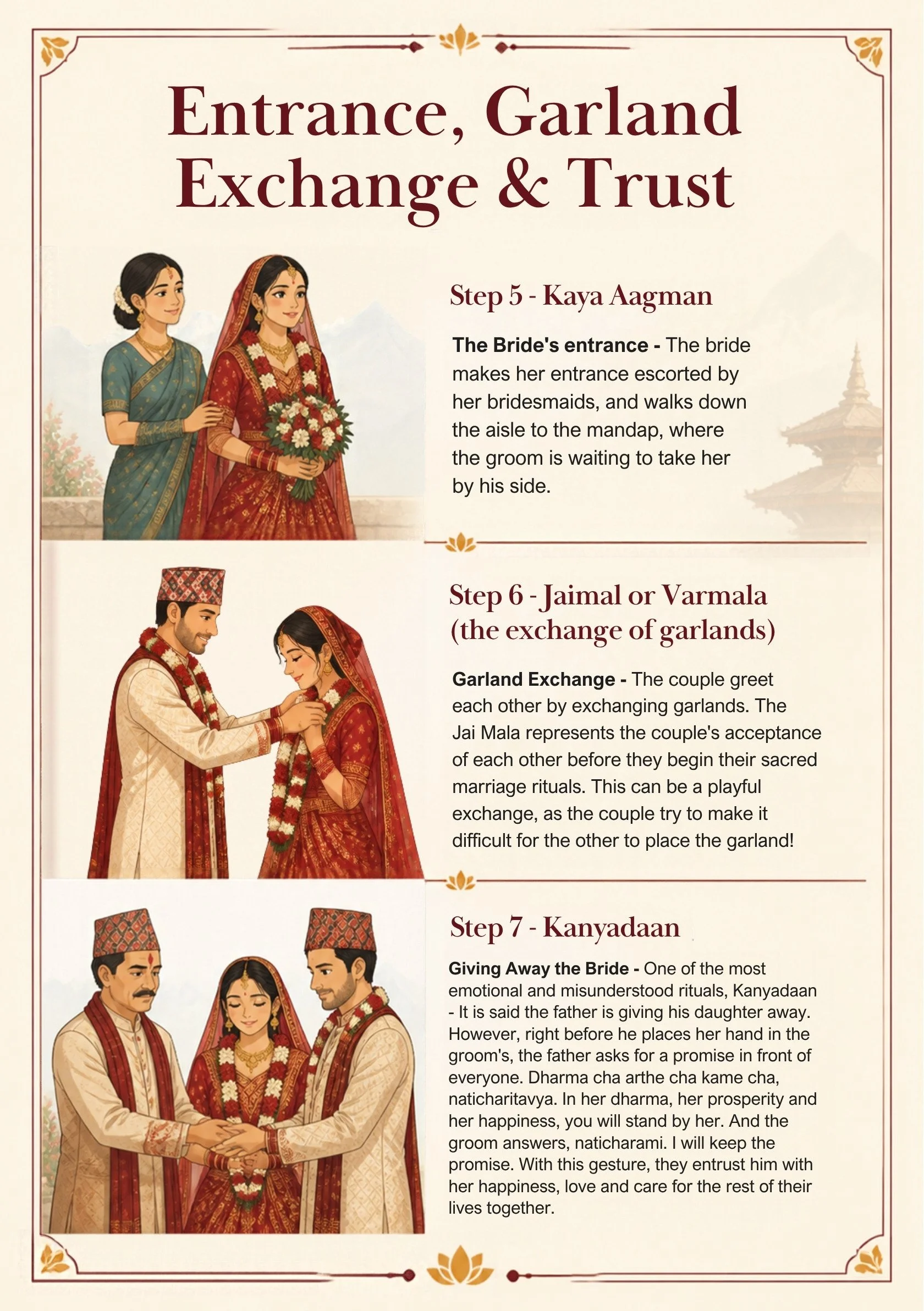
The Bride’s entrance – The bride makes her entrance escorted by her bridesmaids, and walks down the aisle to the mandap, where the groom is waiting to take her by his side.
-
Garland Exchange – The couple greet each other by exchanging garlands. The Jai Mala represents the couple’s acceptance of each other before they begin their sacred marriage rituals. This can be a playful exchange, as the couple try to make it difficult for the other to place the garland!
-
Giving Away the Bride – One of the most emotional and misunderstood rituals, Kanyadaan. It is said the father is giving his daughter away. However, right before he places her hand in the groom’s, the father asks for a promise in front of everyone: Dharma cha arthe cha kame cha, naticharitavya. In her dharma, her prosperity and her happiness, you will stand by her. And the groom answers, naticharami: I will keep the promise. With this gesture, they entrust him with her happiness, love and care for the rest of their lives together.
-
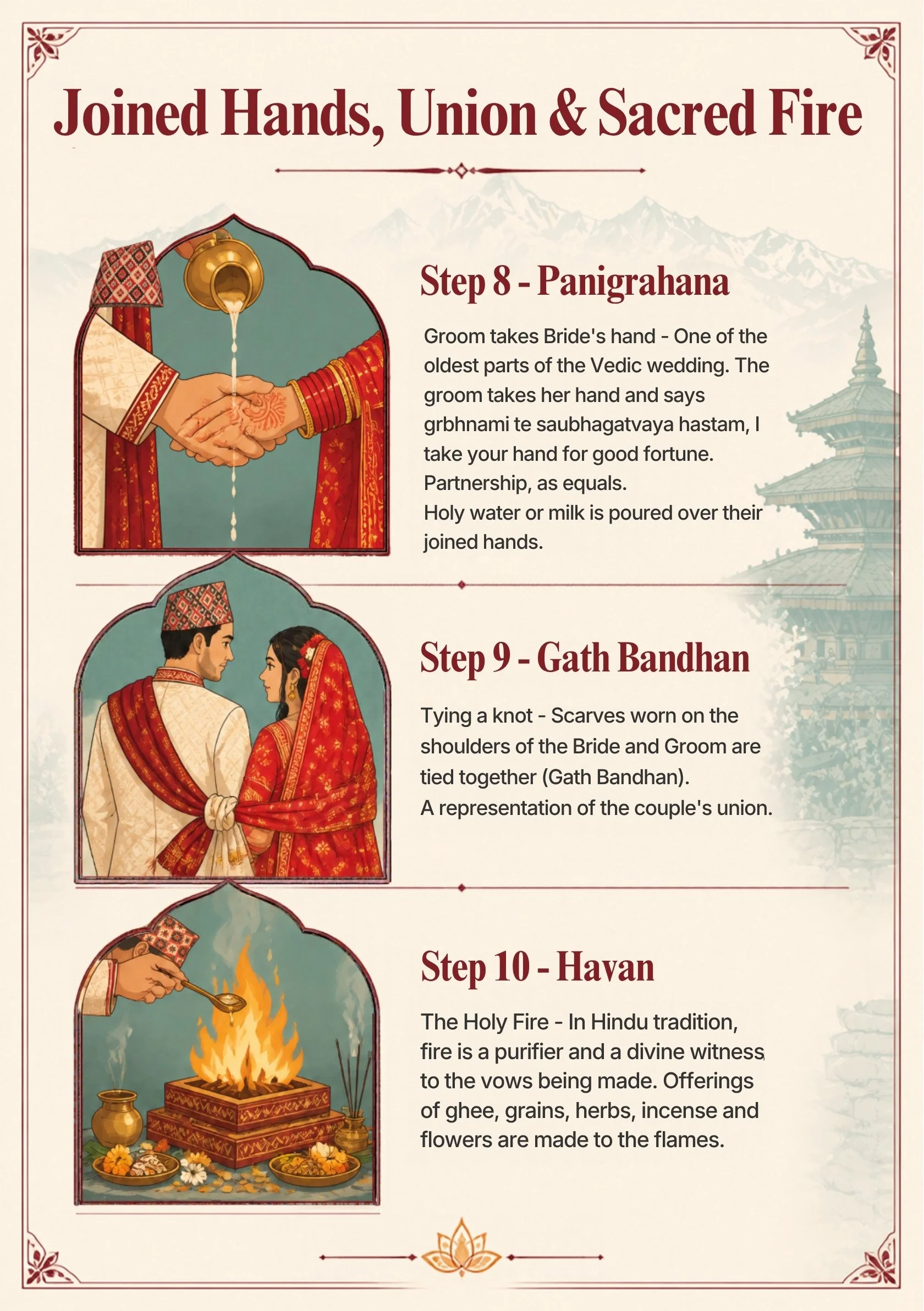
Groom takes Bride’s hand – One of the oldest parts of the Vedic wedding. The groom takes her hand and says grbhnami te saubhagatvaya hastam: I take your hand for good fortune. Partnership, as equals. Holy water or milk is poured over their joined hands.
-
Tying a knot – Scarves worn on the shoulders of the Bride and Groom are tied together (Gath Bandhan). A representation of the couple’s union.
-
The Holy Fire – In Hindu tradition, fire is a purifier and a divine witness to the vows being made. Offerings of ghee, grains, herbs, incense and flowers are made to the flames.
-
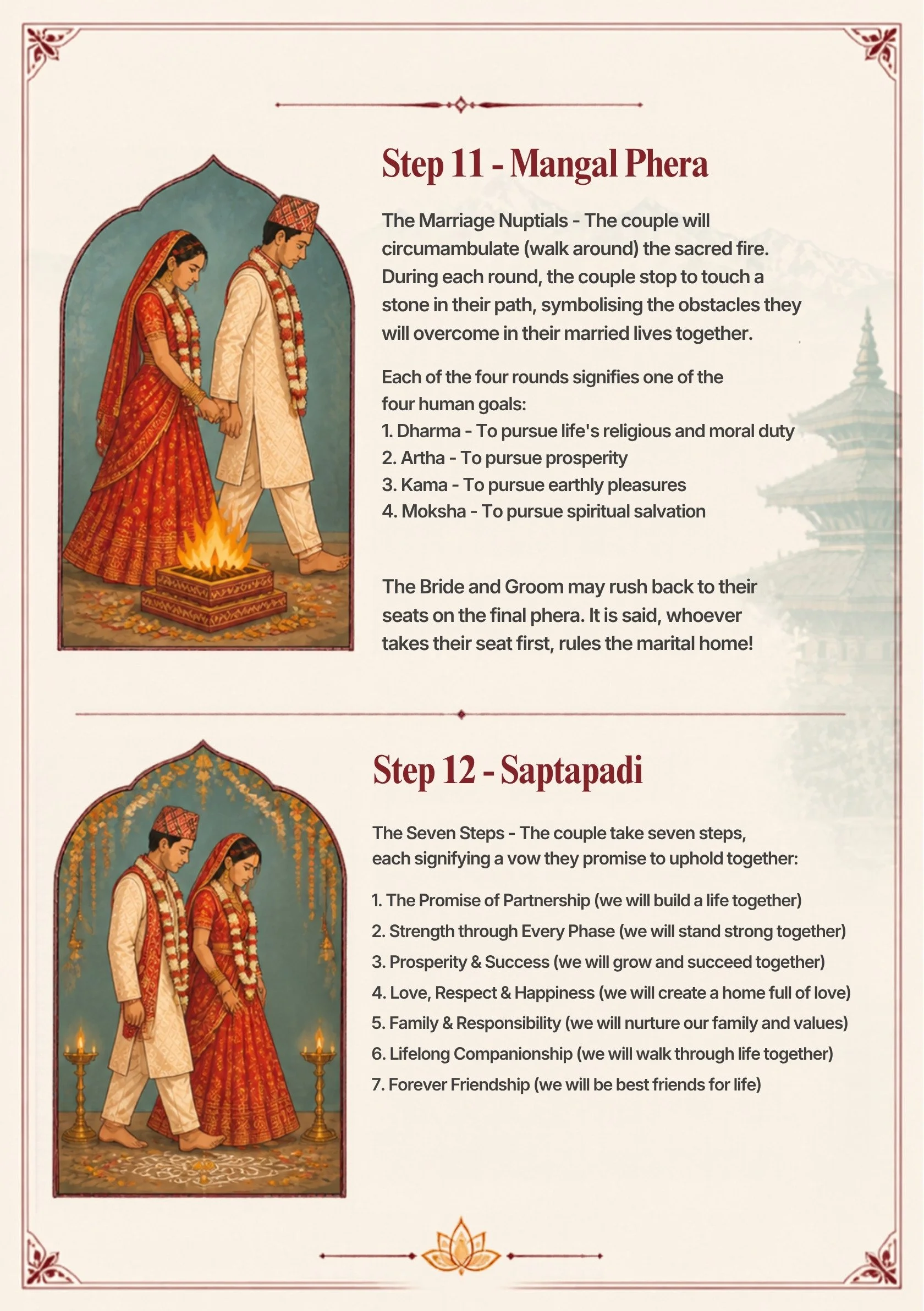
The Marriage Nuptials – The couple will circumambulate (walk around) the sacred fire. During each round, the couple stop to touch a stone in their path, symbolising the obstacles they will overcome in their married lives together.
Each of the four rounds signifies one of the four human goals:
Dharma – To pursue life’s religious and moral duty
Artha – To pursue prosperity
Kama – To pursue earthly pleasures
Moksha – To pursue spiritual salvation
The Bride and Groom may rush back to their seats on the final phera. It is said, whoever takes their seat first, rules the marital home!
-
The Seven Steps – The couple take seven steps, each signifying a vow they promise to uphold together:
The Promise of Partnership (we will build a life together)
Strength through Every Phase (we will stand strong together)
Prosperity & Success (we will grow and succeed together)
Love, Respect & Happiness (we will create a home full of love)
Family & Responsibility (we will nurture our family and values)
Lifelong Companionship (we will walk through life together)
Forever Friendship (we will be best friends for life)
-
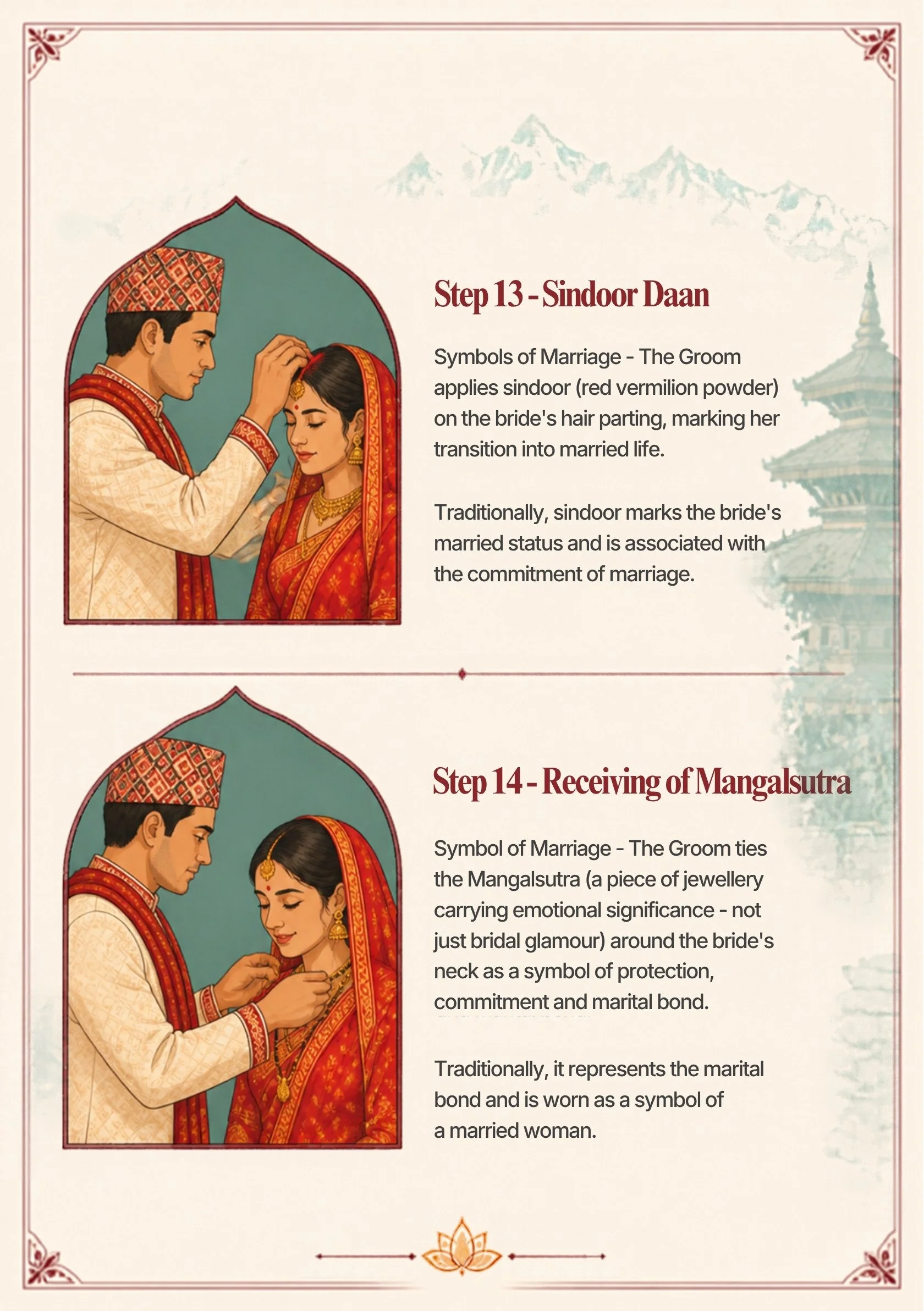
Symbols of Marriage – The Groom applies sindoor (red vermilion powder) on the bride’s hair parting, marking her transition into married life.
Traditionally, sindoor marks the bride’s married status and is associated with the commitment of marriage.
-
Symbol of Marriage – The Groom ties the Mangalsutra (a piece of jewellery carrying emotional significance, not just bridal glamour) around the bride’s neck as a symbol of protection, commitment and marital bond.
Traditionally, it represents the marital bond and is worn as a symbol of a married woman.
-
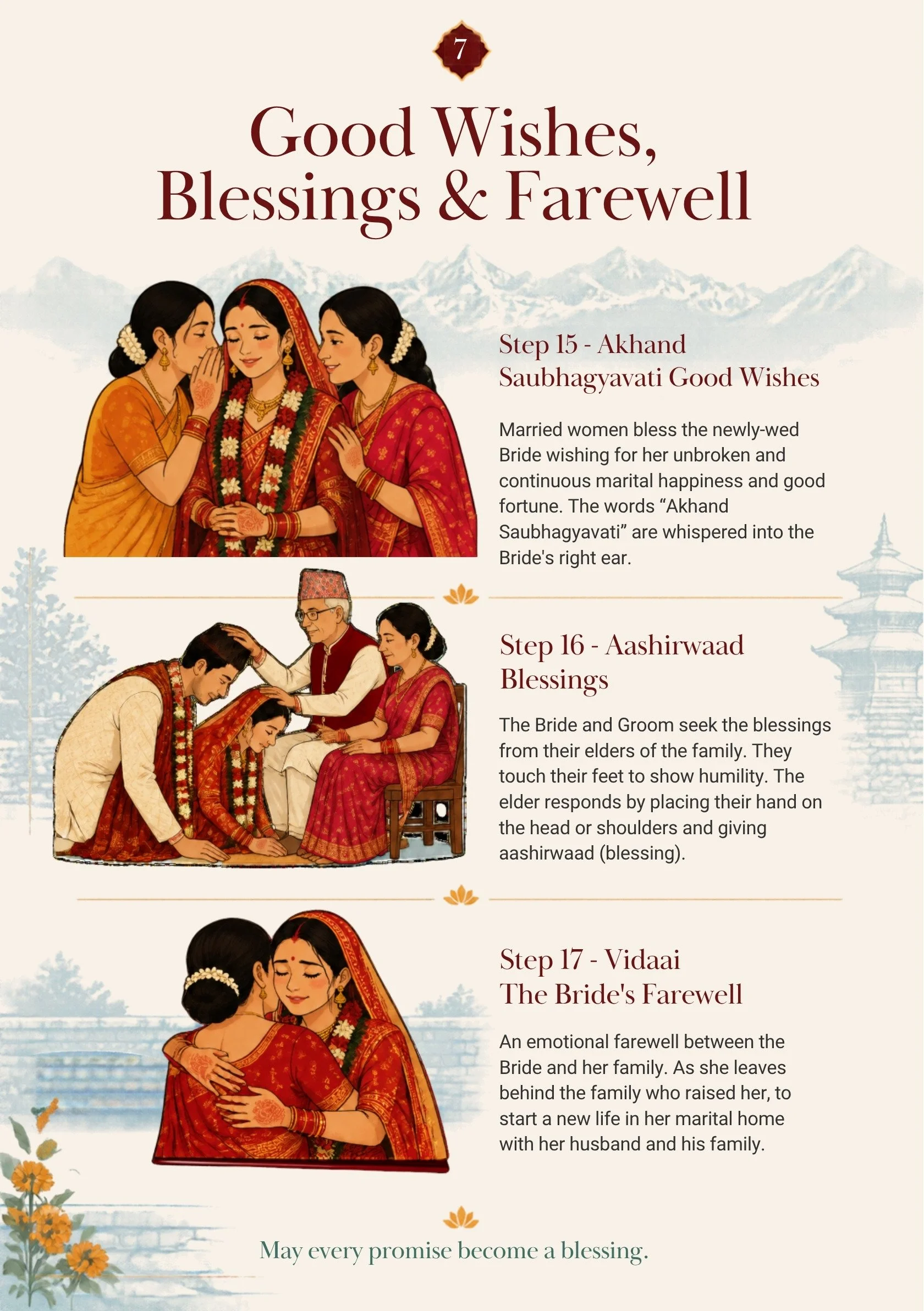
Married women bless the newly-wed Bride wishing for her unbroken and continuous marital happiness and good fortune. The words “Akhand Saubhagyavati” are whispered into the Bride’s right ear.
-
The Bride and Groom seek the blessings from their elders of the family. They touch their feet to show humility. The elder responds by placing their hand on the head or shoulders and giving aashirwaad (blessing).
-
An emotional farewell between the Bride and her family. As she leaves behind the family who raised her, to start a new life in her marital home with her husband and his family.
Heads up: this is a long day (around 6–9 hours), and December evenings in Kathmandu get properly cold, so bring a warm layer. More on that on the What to Wear page.
Where we’re celebrating
Grand Norling Hotel’s Resort
Gokarna, Mulpani, Sankhu Road, Kathmandu
About 7 km from the airport